The Complete Guide to Natural Balms
Mollie’s Balm Co. · 30 October 2026 · 10 minute read
A balm earns its place in a routine by being useful: a small amount on dry-feeling knuckles, a comfortable finish around cuticles, or a simple way to condition an area that needs more attention. Choosing one should not require decoding a wall of promises. The most useful questions are ordinary ones. What is this product intended for? What does its full ingredient list say? Do you prefer fragrance-free care? Will you enjoy its texture enough to use it?
This guide explains how to approach natural balms as everyday cosmetic products. It covers the relationship between texture and purpose, how to read claims, and how to make a sensible choice for your own routine. It also keeps an important boundary clear: a conditioning balm is not a substitute for sunscreen, protective equipment, or advice about a persistent skin problem.
Start with the job you want a balm to do
Before comparing ingredients, name the moment in which you expect to use the product. Perhaps your hands feel dry after washing. Perhaps you would like something richer around your cuticles in the evening. You might want a compact product for a weekend away, or a fragrance-free option that sits beside your usual moisturiser. These are different jobs, even if the same balm can fit more than one of them. A clear purpose helps you compare products on useful details instead of buying the longest benefits list.
Keep the intended area in mind. A product designed for lips should say so. A human skin balm does not automatically belong on a dog’s paws, and a paw product should not become a household all-purpose moisturiser. Similarly, a balm described as multi-purpose still has directions and limits. Read those before extending its use to the face, around the eyes, or to skin that is already sore. The word “everywhere” is a product name, not permission to ignore the label.
What makes a balm different from a cream?
In everyday shopping, “balm” usually describes a relatively substantial product that softens as it is spread. Many balms combine oils, butters and waxes, but the name alone does not guarantee a particular composition. A cream may feel lighter or easier to distribute over a large area; a balm may suit a small area where you prefer a more noticeable finish. Neither format is automatically more sophisticated. The relevant comparison is whether the finished product suits the place, amount and occasion you have in mind.
Three ingredient roles help explain moisturising language. Emollients contribute softness and smoothness, occlusive ingredients help reduce evaporation from the skin surface, and humectants attract and hold water. A finished moisturiser can combine these roles. New Zealand dermatology resource DermNet explains these distinctions; they are more informative than treating every moisturising product as if it works in exactly the same way.
For a shopper, the practical point is that a richer finish can be a deliberate feature. It may be welcome on knuckles at bedtime and less convenient immediately before typing or handling glasses. That does not make the product good at night and bad during the day. It means application amount and timing matter. Start with the use you can imagine repeating comfortably, then choose a texture that supports it.
“Natural” is a starting description, not the whole answer
A plant photograph or a familiar ingredient name can make a product feel approachable. Neither tells you everything about the formula. Natural origin does not establish that a product will suit your skin, that every ingredient is plant-derived, or that it has been certified organic. These are separate questions. A useful product page should let you distinguish what is inside the product from how the brand describes its values.
Be especially careful with a chain of assumptions: natural therefore gentle, gentle therefore suitable for everyone, suitable for everyone therefore appropriate for any skin concern. Each step needs evidence that the word before it cannot provide. The US Food and Drug Administration makes the narrower, useful point that plant-derived fragrance materials can still irritate or cause allergic reactions. That does not make botanical ingredients undesirable; it makes individual tolerance and the full formula relevant.
Ask specific questions instead. Is added fragrance present? Is the product intended for the body area you want to use it on? Can you read the full ingredients before buying? If a certification is important to you, is the actual certification named and applicable to that product? Clear answers are more valuable than a broad promise of purity. You do not need to become a cosmetic chemist to expect clear information.
Read the complete product, not just its hero ingredient
One appealing oil on the front label cannot describe a whole balm. Other ingredients contribute to its firmness, spread, finish and scent. The ingredient list is therefore worth reading alongside the directions and intended use. Look for the complete list belonging to the exact product and scent, rather than assuming every product in a range shares a recipe. A Vanilla version and an Original version should be assessed on their own labels, even when their packaging looks closely related.
Botanical names can look unfamiliar because labels often identify a plant and the part used. An oil, a butter and a wax derived from the same plant are not necessarily interchangeable ingredients. If a name matters because of a known sensitivity or an ingredient preference, ask the maker to clarify it. Avoid substituting a social-media explanation for the information on the actual jar. Our Ingredients page is a useful place to explore ingredient roles; the product’s own list remains the reference for what it contains.
Choose fragrance deliberately
Fragrance is a preference worth deciding early. Some people enjoy a softly scented product as part of their evening routine. Others prefer care without added fragrance, especially when they already use perfume or simply dislike scented hands. Neither preference needs a dramatic justification. What matters is that the product description makes the choice clear and does not present a scented version as fragrance-free.
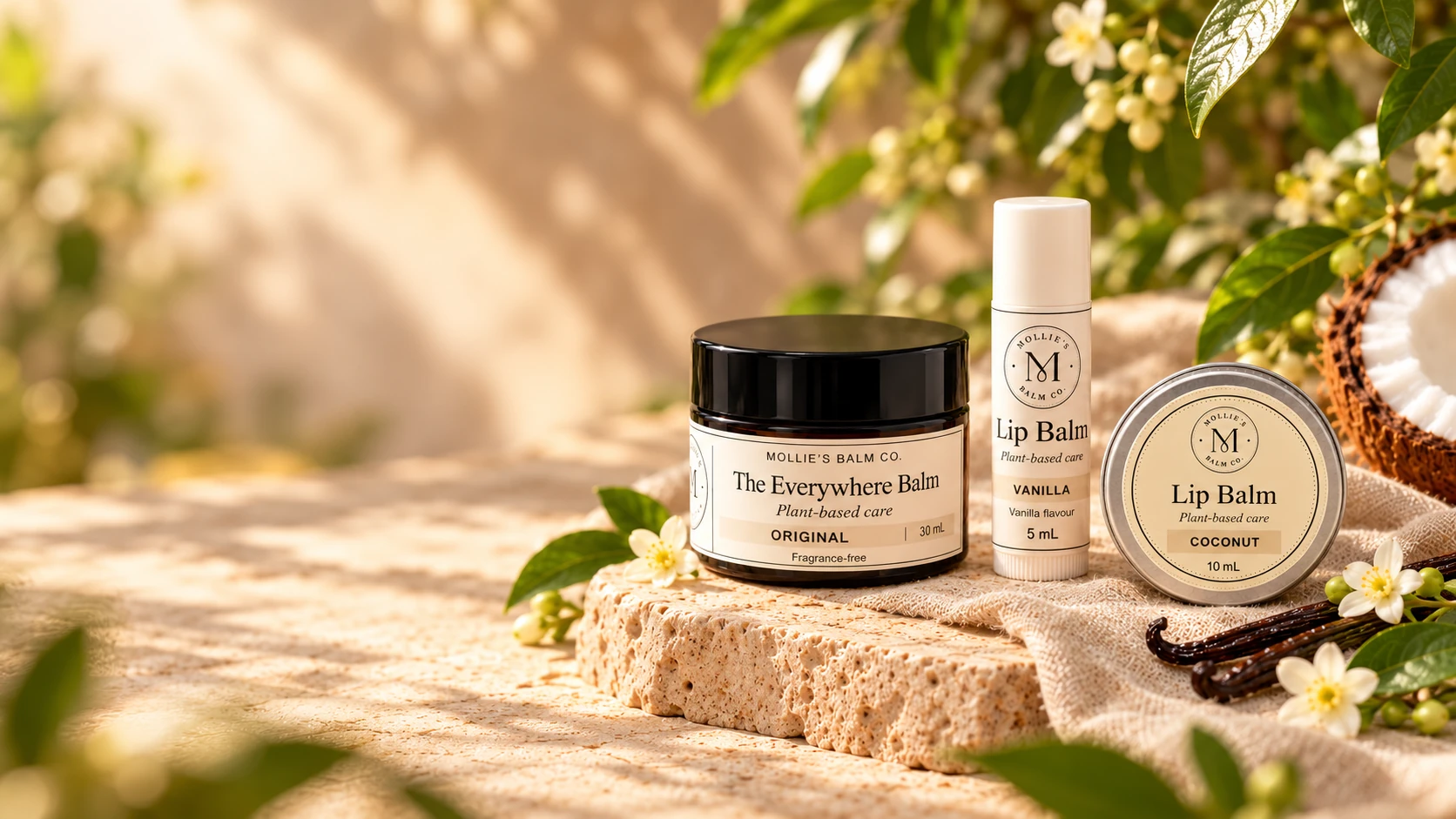
For Mollie’s Everywhere Balm, Original is the fragrance-free option and Vanilla is the scented option with a soft vanilla aroma. That is a useful distinction before you compare sizes. It is not a guarantee that either formula will suit every person. If you have a known allergy, the relevant task is checking the full ingredient list against your own information, with professional advice where needed. A reassuring product name should never replace that step.
Think about texture in the context of your day
Texture is easier to judge through a small, realistic use than through adjectives alone. “Rich” might mean welcome comfort to one person and too much residue to another. If the directions allow, begin with a little product on a small intended area and spread it gradually. Notice how easily it distributes and how the finish feels during the activity that follows. Adding more is simple; applying a thick layer immediately makes the comparison less useful.
Different areas may need different amounts. A tiny area around a nail does not require the same approach as both hands. Likewise, a product used just before bed can leave a finish you would not choose before driving. There is no need to insist on one amount for every occasion. Follow the maker’s directions, use ordinary observation, and stop if the product feels uncomfortable rather than assuming that a sensation proves it is working.
Make the routine easy enough to repeat
A balm that stays hidden at the back of a cupboard has little opportunity to be useful. Choose one sensible location connected with the habit you want: beside your evening hand-care items, in a secure wash bag, or near a desk where clean hands and the right amount are practical. Convenience matters, but storage instructions still come first. A sunny windowsill or a hot car is not an appropriate default just because the product is easy to reach there.
You also do not need to replace a moisturiser you already like. A balm can be a targeted addition for a particular area or moment. Try one change at a time so you can judge whether it adds anything useful. If your routine is already comfortable and manageable, there is no obligation to make it more elaborate. A small number of products with clear jobs is often easier to maintain than a shelf of overlapping promises.
Handle the jar as part of using the product well
Keep the lid secure, use clean and dry hands or a suitable clean applicator, and follow the storage information supplied with the product. Do not add water to soften the contents or mix other products into the jar. The FDA notes that handling, moisture, temperature and light can affect cosmetic condition and shelf life. A balm’s substantial texture does not make those factors irrelevant.
If a product develops an unexpected smell, appearance or texture, ask the maker for guidance rather than using a generic internet rule to decide it is fine. Keep the packaging and batch information available when you ask. Do not invent your own shelf-life extension because a jar still contains plenty of product. Equally, do not assume a product-specific question can be answered from a different brand’s directions. Formulas and packaging vary.
Compare sizes without guessing how long a jar will last
Volume is a clear comparison; months of use are much less predictable. Someone applying a little to cuticles occasionally will use a jar differently from someone conditioning both hands every evening. Think about the use you actually expect, whether you want the product mainly at home, and whether a smaller format is easier to carry. Buying the largest size only makes sense if it matches your likely use and the product’s storage and shelf-life guidance.
Mollie’s Everywhere Balm is available in 30 mL and 60 mL sizes, in both Original and Vanilla. The choice is between actual volumes, rather than a promise that either size will last a fixed number of weeks. On a product page, select the relevant size before checking the displayed price and image. That gives you a concrete comparison and helps avoid accidentally judging the smaller jar by the larger jar’s photograph.
Know when everyday cosmetic care is not enough
Softness and comfortable conditioning are sensible cosmetic expectations. Treating an infection, repairing an injury or managing a persistent skin condition is a different matter. Do not turn an everyday balm into the answer to unexplained pain, bleeding, persistent itching or a rash that does not settle. A health professional can help identify what is happening and whether your routine needs to change. More frequent application is not always the useful next step.
Sun protection is another separate job. A balm without a stated, tested SPF should not be treated as sunscreen because it contains botanical oils or leaves a visible layer. Plan your outdoor protection around appropriately labelled products and current New Zealand sun-safety advice. The same principle applies to protective gloves and other equipment: a cosmetic film should not be assumed to replace protection designed for a particular task.
A clear way to make your choice
A short comparison note can be useful when two products look similar. Write down intended use, fragrance choice, volume, full price and the part of the day you would use each one. Leave out benefits that neither maker has supported. You may find the decision becomes much simpler: one product fits your bag, one belongs at home, or one meets a fragrance preference the other does not. There is no need to turn a straightforward choice into a competition between ingredient lists.
When you compare balms, work through the decision in order. First choose the intended user and area. Then check the complete ingredients and fragrance information. Consider texture, format and the practical place the product will have in your routine. Finally, compare the size and price you actually intend to buy. This sequence keeps appealing photography in its proper place: useful for seeing the product, but not a substitute for the details that determine whether it fits.
For everyday human skin care, you can explore the Everywhere Balm collection and compare Original with Vanilla. Read the directions, choose the format that suits your habits, and keep your expectations focused on conditioning and comfort. The best addition to a routine is not necessarily the product that claims the most uses. It is the one whose purpose you understand and whose use remains straightforward after the excitement of buying it has passed.